
To get your brand mentioned in AI answers, you must align three signals that large language models rely on during response synthesis: extractable answer-first pages on your own domain, consistent entity structured data, and independent third-party corroboration across the domains that AI retrieval engines already cite. Answer engines such as ChatGPT Search, Perplexity, Google AI Overviews, and Claude do not reward keyword stuffing; they reward high-density factual passages that directly resolve a sub-query and are verified across multiple trusted sources.
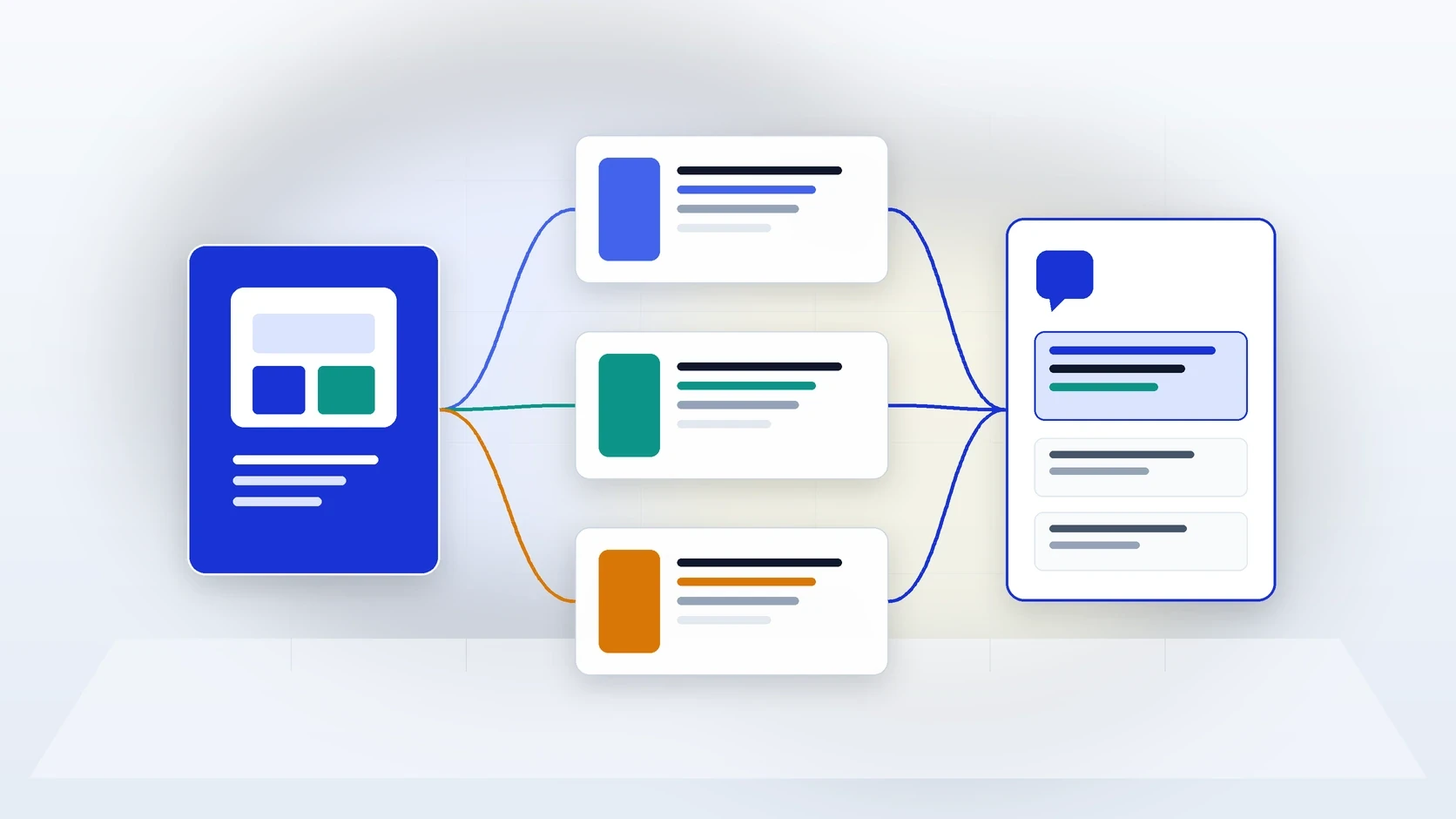
The 6-Step GEO Playbook to Earn Consistent AI Brand Mentions
1. Unblock live AI retrieval bots: Ensure
OAI-SearchBot,PerplexityBot,Claude-SearchBot, andGooglebotreceive fast, server-rendered HTML.2. Disambiguate your brand entity: Deploy explicit
OrganizationandSoftwareApplicationorProductJSON-LD with verifiedsameAslinks.3. Restructure pages in Reverse Pyramid format: Open every key page with a 60 to 90 word direct answer followed by a 2-column specification or comparison table.
4. Close third-party co-citation gaps: Secure inclusion on the specific editorial listicles, review platforms, and community threads that answer engines already cite for your category.
How Answer Engines Decide Which Brands to Mention
When a buyer submits a commercial prompt (for example, 'What are the best AI visibility platforms for UK B2B teams?'), modern answer engines execute a two-layer decision process. The first layer is Parametric Priors: the associations baked into the foundation model's weights during pre-training and post-training alignment. The second layer is Retrieval-Augmented Generation (RAG) Grounding: the model rewrites the user's prompt into three to six search queries, fetches top passages from a search index, reranks those passages for factual specificity, and synthesises an answer backed by inline citations.
You cannot rewrite a foundation model's pre-training weights overnight, but you can influence RAG grounding within days. By understanding how query fan-out works, you can engineer both your owned content and your off-site footprint so retrieval pipelines repeatedly select your brand as a primary candidate. For deeper foundational strategy, explore our 7 proven strategies to rank in AI search results.
AI Synthesis Mechanism | How It Selects Brands & How You Influence It |
Query Fan-Out & Sub-Query Expansion | Mechanism: The LLM breaks one complex buyer prompt into multiple specific search queries (pricing, integrations, UK support, alternatives). |
Passage Reranking & Information Density | Mechanism: Retrieval models score 100 to 250 word chunks based on semantic relevance and verifiable facts per token. |
Multi-Source Consensus Verification | Mechanism: Models cross-check claims across independent domains before recommending a vendor for high-intent prompts. |
Entity Resolution & Disambiguation | Mechanism: Knowledge graphs connect brand names to categories, headquarters, products, and competitors. |
Step 1: Audit Your Baseline Prompt Visibility and Citation Graph
Before editing a single page, map where your brand currently stands across a structured cohort of 50 to 100 commercial prompts. Using NeuraCite, inspect not only whether your brand is mentioned, but which external URLs the answer engines cite when recommending your competitors.
In almost every B2B vertical, you will discover that 15 to 25 specific URLs (such as three industry comparison blogs, two software review category pages, and four high-ranking documentation guides) account for over 60% of all citations across ChatGPT and Perplexity. This list of high-frequency URLs becomes your exact roadmap for both content creation and digital PR.
Step 2: Establish a Crystal-Clear Entity Home and Schema Graph
Large language models frequently omit emerging brands because they cannot confidently resolve what the company does, who it serves, or how it differs from similarly named entities. Your homepage and /about page must function as an unambiguous Entity Home.
Write a canonical one-sentence entity definition: State clearly in prose: '[Brand Name] is a [specific category] designed for [target audience] that provides [core capabilities], headquartered in [location].' Keep this phrasing consistent across your website, LinkedIn, Crunchbase, G2, and press boilerplate.
Deploy interconnected JSON-LD structured data: Use Schema.org Organization and SoftwareApplication (or
Product/Service) markup with stable@idURIs andsameAsarrays linking to your verified external profiles.Verify technical crawlability: Confirm via AI crawlability diagnostics that every core product and comparison page renders full HTML on the server without requiring client-side JavaScript execution.
Step 3: Write Answer-First Pages Built for RAG Passage Extraction
When an AI retrieval bot fetches your page, it does not read your site like a human casually scrolling through hero animations. Chunking algorithms slice your HTML into semantic passages (typically 120 to 300 words) anchored by <h2> and <h3> headings.
Lead every page and section with the direct answer: Place a bolded 60 to 90 word summary immediately below the title and below each major
<h2>. Answer the 'what', 'why', and 'how much/who for' before adding narrative context.Publish honest, criteria-led comparison pages: Buyers constantly ask AI assistants to compare vendors ('Brand A vs Brand B' or 'Best alternatives to X'). If your site lacks structured comparison pages, the model will pull from a competitor's comparison page instead.
Convert dense paragraphs into 2-column HTML tables: LLMs parse native
<table>elements with high structural fidelity. Summarise pricing tiers, feature availability, integration compatibility, and ideal buyer profiles in clean tables.Include original information gain: Google's AI features guidance and RAG rerankers reward content that contributes original benchmarks, diagnostic formulas, or verifiable technical steps rather than repeating generic definitions.
Step 4: Engineer Third-Party Co-Citations Where Models Look for Consensus
Owned-domain optimisation is necessary, but for competitive 'best tools for X' prompts, answer engines heavily weight third-party editorial consensus. Even if your own website claims you are the category leader, an LLM will hesitate to recommend you if no external source corroborates that claim.
Third-Party Citation Channel | Tactical Action to Earn AI Model Mentions |
Cited Editorial Listicles & Industry Roundups | Export the exact third-party blog URLs cited by ChatGPT and Perplexity for your target prompts in NeuraCite. Pitch the authors with updated product data, benchmark tables, or partner integrations to get added to those already-cited pages. |
B2B Review Aggregators (G2, Trustpilot, Capterra) | Ensure your category taxonomy tags match the exact terms buyers use in prompts. Encourage customers to mention specific use cases, integrations, and measurable outcomes in their review text. |
Community & Practitioner Discussions (Reddit, GitHub, Stack Exchange) | Participate transparently with technical depth in relevant practitioner threads. Answer engines frequently retrieve Reddit and forum discussions when users ask for 'real user experiences' or 'honest pros and cons'. |
Original Research & Quotable Benchmark Studies | Publish original datasets with clear methodology. When industry writers cite your statistics, your brand name becomes co-located with core category terms across dozens of authoritative domains. |
Step 5: Monitor Mention Velocity and Correct Inaccuracies Early
Once your updated pages are indexed and third-party co-citations go live, track your brand share in AI answers weekly. Pay close attention to whether models describe your pricing, positioning, and feature set accurately. If an engine begins mentioning your brand with outdated or hallucinated details, follow our dedicated step-by-step workflow to fix missing or incorrect brand citations in AI answers.